
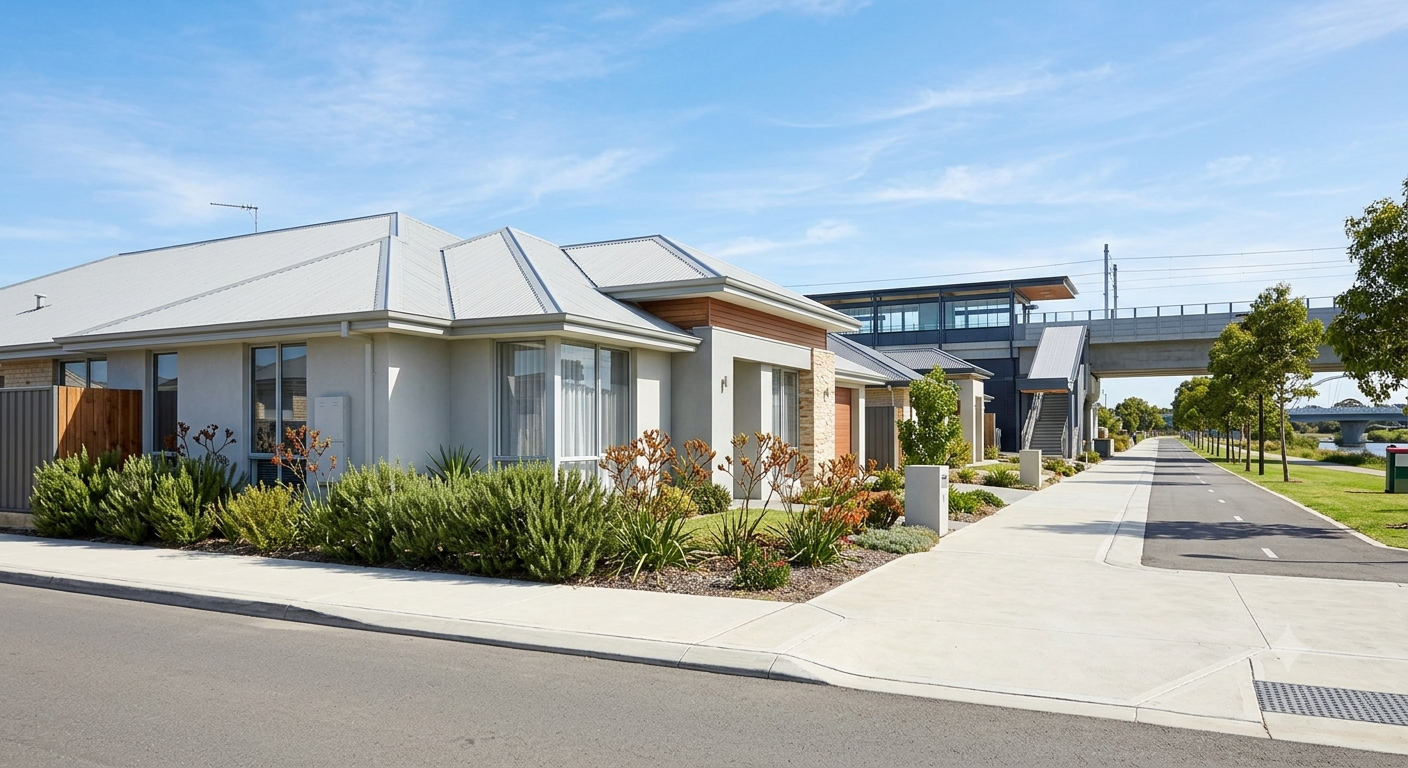
Infrastructure plays a significant role in shaping Australia’s residential property market. From new railway stations and road upgrades to schools, hospitals and major urban renewal developments, infrastructure projects can improve accessibility, strengthen local economies and influence buyer demand. For property investors, understanding these changes can help identify opportunities for long-term capital growth and make more informed investment decisions.
However, the relationship between infrastructure investment and property prices is not always straightforward. While some projects improve the appeal of surrounding suburbs, others may introduce construction disruption, increased traffic or additional housing supply. The timing, scale and quality of an infrastructure project all influence its potential impact on property values.
For buyers and investors, the key is to assess how a proposed or completed project may change the long-term desirability of a location rather than relying on infrastructure announcements alone.
What Is Infrastructure Investment in Real Estate?
Infrastructure investment refers to the development, expansion or improvement of essential facilities and services that support a community’s growth and everyday activities.
In the property market, infrastructure projects can include:
- Transport infrastructure: New railway stations, metro lines, light rail networks, bus corridors, motorways and road upgrades.
- Education facilities: New schools, universities, vocational training centres and childcare facilities.
- Healthcare infrastructure: Hospitals, medical centres and specialist healthcare facilities.
- Community amenities: Parks, recreational facilities, libraries, sporting complexes and cultural precincts.
- Commercial and employment infrastructure: Business parks, shopping centres, industrial precincts and major employment hubs.
- Urban renewal projects: Redevelopment of established suburbs, improved public spaces and the revitalisation of commercial centres.
These developments can affect the way people live, work and travel. When an area becomes more convenient, connected and attractive, demand for nearby housing may increase, potentially supporting property price growth over time.
1. Improved Transport Connectivity Can Increase Property Prices
Transport infrastructure is one of the most closely examined factors affecting property prices. Access to reliable public transport and efficient road networks can reduce commuting times, improve access to employment and make a suburb more appealing to a broader range of buyers and tenants.
For example, a new railway station or metro connection may make a previously less accessible suburb more practical for people working in major employment centres. Similarly, road upgrades can improve connections between residential areas, business districts and essential services.
Research examining transport infrastructure in Sydney has found that property value impacts vary according to the type of project, distance from the transport facility and stage of development. A 2024 study comparing heavy rail and light rail projects identified different patterns of value uplift, demonstrating that the effects are not uniform across all locations.
For property investors, this means proximity to transport should be assessed alongside the quality and usefulness of the service. A property within convenient walking distance of a station may benefit from improved accessibility, but the outcome will also depend on service frequency, connections, surrounding amenities and local market conditions.
It is also important to consider potential disadvantages. Properties immediately beside busy roads, railway lines or transport facilities may experience noise, congestion or reduced privacy. These factors can offset some of the benefits of improved connectivity.
2. Better Amenities Can Strengthen Buyer and Tenant Demand
Access to quality schools, healthcare services, parks, shopping centres and recreational facilities contributes to a suburb’s liveability. Infrastructure projects that improve these amenities can make an area more attractive to households seeking convenience, accessibility and a better lifestyle.
A new school, for instance, may improve the appeal of a growing residential precinct for families. A hospital or medical facility can strengthen access to essential services, while upgraded parks and community spaces can enhance the area’s overall residential environment.
These improvements can support housing demand by attracting additional residents and broadening the pool of prospective buyers and tenants.
For investors, stronger tenant demand may contribute to rental resilience and reduce the risk of prolonged vacancies, although neither outcome is guaranteed. Likewise, improved local amenities may support capital growth over time, depending on affordability, supply and broader economic conditions.
When assessing what increases property value, investors should therefore look beyond transport links and consider whether a suburb offers the facilities residents need for everyday life.
3. Employment Growth Can Support Long-Term Capital Growth
Major infrastructure projects can create construction jobs, support business activity and improve access to employment centres. Over the longer term, projects that encourage commercial development or improve connections between residential and employment precincts may influence where people choose to live.
For example, an upgraded transport corridor connecting a residential suburb with a major business district may make commuting more practical. A new commercial precinct or business park may also attract workers who prefer to live closer to their workplace.
As employment opportunities expand, demand for housing in accessible locations may increase. This can contribute to property price growth where housing supply does not fully meet demand and buyers remain willing and able to pay for the benefits of the location.
Nevertheless, employment growth does not automatically translate into higher property values. The durability of new jobs, the types of industries involved, local housing affordability and the number of new dwellings entering the market all matter.
Investors should examine whether an infrastructure project is likely to generate sustained economic activity or deliver only temporary construction-related benefits.
4. Infrastructure Projects Can Accelerate Suburban Development
Large-scale infrastructure investment can influence the future development of entire suburbs and surrounding precincts. Improved transport, upgraded roads and new community facilities may encourage residential construction, commercial investment and urban renewal.
As an area develops, it may attract new businesses, improve its range of services and become more established as a residential destination. These changes can strengthen its position within the broader property market.
For investors, emerging infrastructure corridors may present opportunities to identify suburbs before planned improvements are fully reflected in market prices. However, this requires careful analysis of project feasibility, funding commitments, planning controls and likely development timelines.
There is also an important supply consideration. New infrastructure can make previously less accessible land more suitable for development, increasing the number of homes available. If new housing supply grows faster than buyer and tenant demand, property price growth may be more moderate than expected. The strongest opportunities are not necessarily found in suburbs receiving the largest infrastructure investment. They may be found in locations where improvements address existing constraints, support sustainable population growth and enhance liveability without creating an oversupply of housing.