
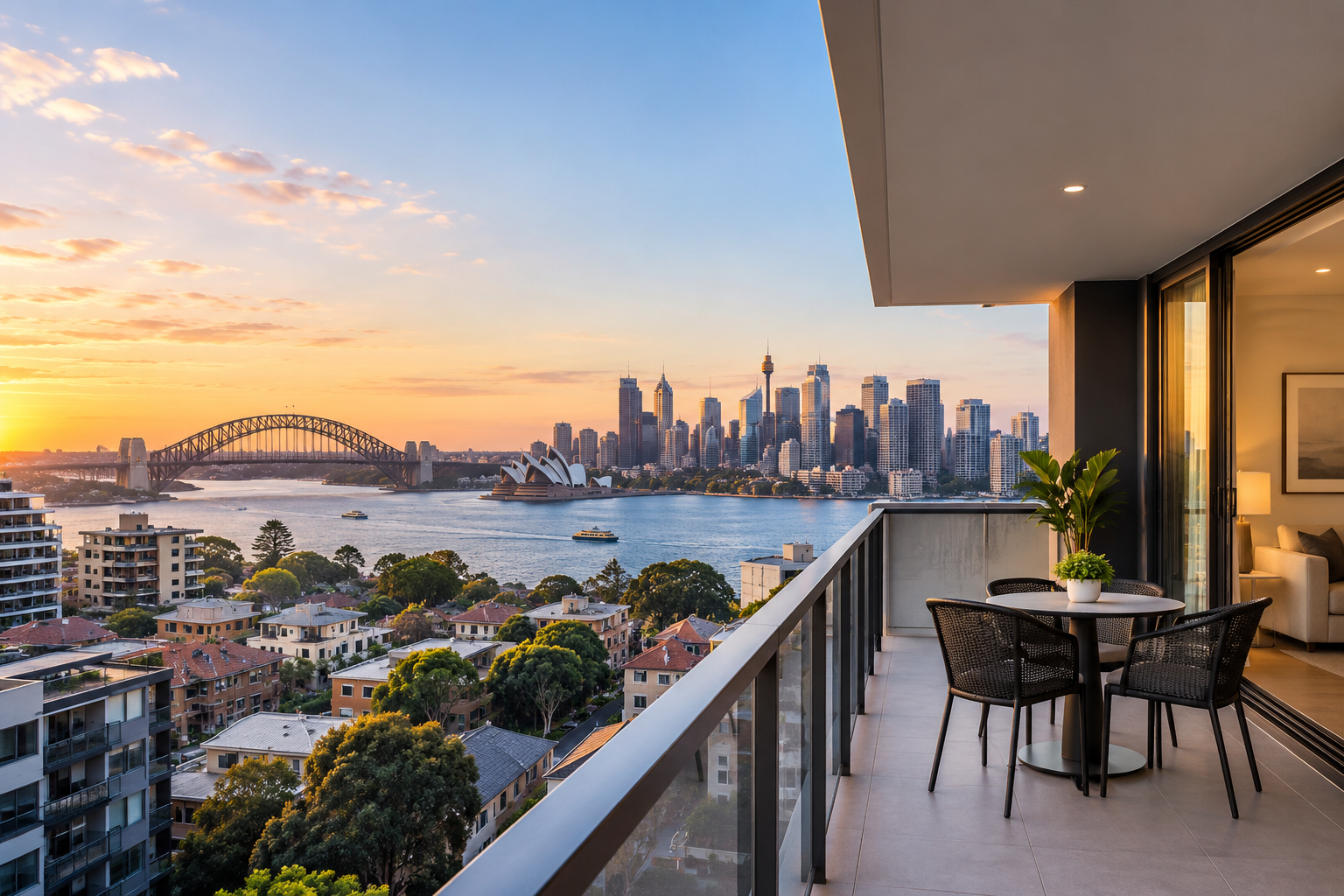
Sydney has long been one of Australia’s most closely watched property markets, attracting investors seeking rental income, long-term capital growth and opportunities to diversify their portfolios. While detached houses remain an important part of the market, apartments are gaining attention as investors reassess affordability, tenant demand and the practicalities of property ownership.
For many buyers, Sydney apartment investment offers a way to enter an established property market without the purchase price associated with many standalone houses. Apartments in well-connected suburbs can appeal to professionals, students, smaller households and people seeking convenient access to employment, transport and lifestyle amenities.
However, successful investing requires more than identifying a property in a popular location. Understanding the Sydney apartment market, assessing rental potential and evaluating the long-term fundamentals of a particular building are essential steps towards making an informed investment decision.
1. A More Accessible Entry Point into the Sydney Property Market
Affordability is a significant consideration for investors exploring Sydney property. In many suburbs, apartments offer a lower purchase price than detached houses, potentially making property ownership more accessible to buyers with a defined budget.
This price difference can be particularly relevant to first-time investors and buyers looking to build a property portfolio gradually. Rather than committing to a higher-priced house, investors may be able to consider Sydney apartments for sale in established residential areas with access to employment, public transport, shopping precincts and essential services.
A lower purchase price may also reduce the initial capital required, although buyers must account for additional expenses such as stamp duty, conveyancing, loan costs, strata levies and ongoing maintenance.
Importantly, affordability should not be assessed in isolation. Investors need to compare the property’s purchase price with its rental prospects, ownership costs and potential for future resale. An apartment that appears inexpensive may offer limited value if it is located in an oversupplied area or belongs to a building with substantial maintenance liabilities.
The objective is to identify a property where the purchase price, location and expected returns are aligned with the investor’s financial goals.
2. Rental Demand Creates Opportunities for Investors
Sydney’s diverse employment base, education sector and lifestyle appeal support demand for a range of rental properties. Apartments can suit tenants who prioritise convenience, proximity to workplaces and access to public transport over the additional space associated with a detached house.
Professionals working in business districts, students attending educational institutions, and individuals relocating for employment may all consider apartment living, depending on their circumstances and budget.
For property investors, this diversity can create opportunities to target specific tenant groups. A well-positioned apartment near a railway station, major employment hub or university may appeal to a broader range of prospective renters than a comparable property with limited transport access.
Investors researching Sydney apartments to rent and Sydney apartments for rent can use current listings to understand competing properties, advertised rents, available features and local rental conditions. This research helps establish whether an apartment is competitively positioned within its suburb.
Nevertheless, rental demand varies considerably between locations and property types. Investors should assess vacancy levels, comparable leased properties, tenant preferences and the supply of competing apartments before making a purchase decision.
A property’s rental appeal ultimately depends on how well it meets the needs of its intended tenant market.
3. Evaluating Rental Yield and Cash Flow Potential
Rental income is one of the primary considerations when buying an apartment as an investment. Sydney rental yield can help investors compare properties and evaluate how effectively a purchase price translates into rental income.
Gross rental yield is calculated by dividing annual rental income by the property’s purchase price and multiplying the result by 100.
For example, consider an apartment purchased for $800,000 that generates $750 per week in rent. Its annual rental income would be $39,000, producing a gross rental yield of approximately 4.9%.
This calculation provides a useful starting point, but it does not represent the investor’s actual profit. Net returns must account for expenses such as strata levies, council rates, water charges, insurance, property management fees, repairs, maintenance, loan interest and periods without a tenant.
Investors should also consider whether rental income is likely to cover a meaningful proportion of ongoing ownership costs under different market conditions.
Comparing Sydney rental yield across suburbs can help identify properties that warrant closer investigation. However, a higher yield does not automatically indicate a better investment. It may reflect weaker capital growth prospects, additional property risks or lower demand for resale.
A balanced assessment considers both income and the potential for long-term capital appreciation, while recognising that neither outcome is guaranteed.
4. Location Remains a Key Investment Consideration
Location continues to influence the rental appeal, resale prospects and long-term performance of Sydney apartments. Even within the same suburb, differences in transport access, building quality, surrounding development and local amenities can affect a property’s desirability.
Established suburbs with convenient access to employment centres, public transport, schools, healthcare facilities and retail precincts may appeal to tenants seeking practical, well-connected living arrangements.
Investors should examine how easily residents can commute, access everyday services and enjoy nearby recreational facilities. Future infrastructure projects may also influence local demand, although proposed developments should not be treated as guaranteed drivers of property value growth.
It is equally important to understand the local supply pipeline. A suburb experiencing substantial apartment construction may face greater competition among landlords, potentially affecting rental growth and vacancy rates.
When comparing investment properties in Sydney, buyers should assess the suburb’s existing rental market alongside planned residential developments and changes in local employment or transport infrastructure.
A location with sustained tenant demand, limited directly competing supply and strong everyday amenity may offer a more compelling investment case than one selected solely because of its reputation or proximity to the CBD.
5. Changing Sydney Property Market Trends
Sydney property market trends are influenced by a combination of interest rates, borrowing capacity, population changes, construction costs, housing supply and broader economic conditions. These factors can affect buyer confidence, apartment prices in Sydney and the balance between owner-occupiers and investors.
Apartments may attract increased attention when the cost of purchasing a detached house becomes prohibitive for certain buyers. However, this does not mean apartment prices will rise uniformly across the city.
Market performance can vary according to suburb, building age, apartment size, construction quality, local supply and buyer preferences. A modern apartment near transport infrastructure may perform differently from an older unit in a building facing significant capital works.
Investors should therefore avoid relying on broad market headlines when assessing a particular property. Recent comparable sales, current rental evidence, historical price movements and local development activity provide a more useful basis for evaluating opportunities.
It is also worth distinguishing between short-term market movements and long-term investment fundamentals. Property values can fluctuate, and investors may need to hold an apartment through periods of slower growth or weaker buyer demand. A disciplined approach focuses on purchase price, property quality, sustainable rental demand and the investor’s ability to manage financial commitments over time.