
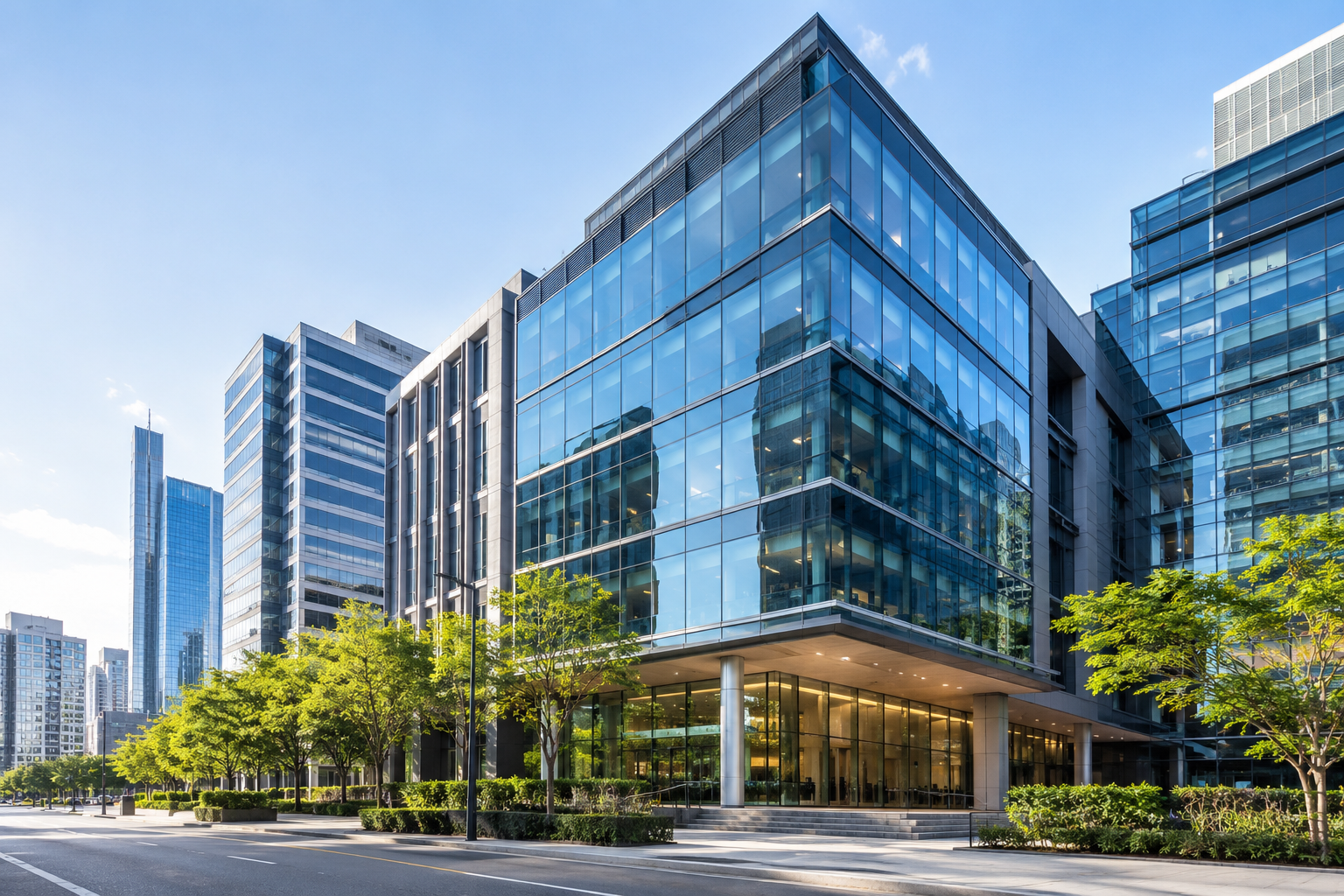
As Australian property investors prepare for 2027, choosing between residential and commercial property is becoming an increasingly important strategic decision. Both asset classes offer opportunities to generate rental income, build long-term wealth and benefit from capital growth. However, they differ considerably in their entry costs, financing requirements, tenant demand, ongoing expenses and exposure to market conditions.
For investors considering property investment in Australia, the right choice depends on their financial position, investment objectives and willingness to manage risk. Residential property may appeal to those seeking access to a broad tenant market and long-term capital growth, while commercial property investment can offer higher potential rental yields and longer lease arrangements.
In Sydney, where property values, rental demand and commercial activity vary significantly between locations and asset types, understanding these differences is particularly important. Rather than assuming one option will outperform the other, investors should assess how each asset aligns with their financial goals and the market conditions expected in 2027.
Understanding Residential and Commercial Property Investment
Before comparing the two approaches, it is important to understand what each involves.
Residential property investment generally includes houses, apartments, townhouses and other dwellings purchased to generate rental income or achieve capital growth. Returns are influenced by housing demand, population growth, affordability, rental supply, interest rates and the property’s location.
Commercial property investment includes office buildings, retail premises, industrial facilities, warehouses and other properties used for business purposes. Its performance is closely linked to business activity, tenant demand, employment trends, lease conditions and the financial strength of tenants.
Although both investments involve owning real estate, their income structures and risk profiles can differ substantially. Residential properties serve the housing needs of individuals and families, whereas commercial properties depend more directly on businesses requiring suitable premises to operate.
For investors evaluating residential vs commercial real estate, understanding these underlying drivers is the first step towards making an informed decision.
1. Rental Yield: Which Investment Offers Better Income Potential?
Rental yield is one of the most important considerations when comparing investment properties. It measures the rental income generated relative to the property’s purchase price and helps investors assess its income-producing potential.
Commercial properties often offer higher rental yields than residential properties. This can make them attractive to investors who prioritise income generation and want their assets to produce a stronger rental return relative to their purchase price.
Commercial leases may also require tenants to contribute towards certain property expenses, such as council rates, insurance and maintenance, depending on the lease structure. These arrangements can reduce the owner’s exposure to some operating costs, although the precise obligations depend on the agreement.
Residential property investment generally offers more modest rental yields in expensive markets such as Sydney. High purchase prices can limit the proportion of the investment recovered through rent, even when tenant demand is strong.
However, lower yields do not necessarily indicate a weaker investment. Residential properties may offer other benefits, including access to a larger tenant pool, potential long-term capital growth and comparatively straightforward leasing arrangements.
When assessing Sydney rental yield, investors should compare properties using consistent calculations. Gross rental yield measures annual rent against the purchase price, while net rental yield accounts for relevant operating expenses. Commercial and residential yields should not be compared without checking whether the figures are calculated on the same basis.
Ultimately, a higher headline yield is only valuable if the property can sustain its income and the associated costs and risks remain manageable.
2. Capital Growth: Which Property Type Has Greater Long-Term Potential?
Capital growth refers to an increase in a property’s market value over time. For many investors, it is a central component of their wealth-building strategy.
Residential property can benefit from population growth, limited housing supply, established neighbourhoods, infrastructure improvements and demand from owner-occupiers. Properties in locations with strong employment access, transport connections, schools and lifestyle amenities may attract sustained buyer interest.
In Sydney, these factors can be particularly relevant because housing affordability and supply constraints influence where buyers and tenants choose to live. Nevertheless, performance varies between suburbs, property types and individual assets. A property’s purchase price, condition, land component and future marketability all influence its potential for capital growth.
Commercial property follows a different set of drivers. Its value is influenced by rental income, lease security, tenant quality, vacancy rates, operating expenses and the yields investors require. Properties with reliable tenants, competitive rents and favourable lease terms may attract investor interest, while vacant premises or assets in weaker locations can experience valuation pressure.
The comparison of residential vs commercial property capital growth therefore requires more than looking at historical price increases. Investors should consider how each asset is likely to perform under different economic conditions, including changes in interest rates, business confidence, population growth and demand for particular property types.
Neither asset class guarantees stronger capital appreciation. The most suitable investment is one whose income profile, location and long-term prospects align with the investor’s objectives.
3. Entry Costs, Financing and Accessibility
The amount of capital required to purchase a property can significantly influence an investor’s choice.
Residential property is often more accessible to individual investors because it is widely available across different price ranges and locations. Established houses, apartments and townhouses provide multiple entry points, although Sydney’s relatively high property prices can still create substantial financial barriers.
Residential investment lending is also a familiar option for many borrowers. However, approval depends on factors such as income, existing liabilities, deposit size, credit history and the lender’s assessment of the property.
Commercial property investment can require a larger deposit and more detailed financial assessment, depending on the asset, lender and borrower’s circumstances. Lenders may place greater emphasis on lease terms, rental income, tenant quality and the property’s ability to service the loan.
Investors should also account for acquisition costs, including stamp duty, legal fees, inspections, loan costs and any immediate repairs or fit-out requirements. Commercial premises may involve additional expenses associated with building compliance, specialist maintenance or leasing incentives.
For those exploring commercial property investment in Sydney, the purchase price should never be the only measure of affordability. A thorough assessment of financing costs, available reserves and potential periods without rental income is essential before committing capital.
4. Tenant Demand, Vacancy and Lease Security
Tenant demand is another major difference between residential and commercial property.
Residential properties generally appeal to a broad market of renters, including individuals, couples, families and students. Demand is influenced by employment opportunities, household formation, affordability and access to transport and services.
Sydney’s ongoing housing needs can support demand for well-located rental properties. However, investors must still consider local vacancy levels, competing rental supply, property condition and the rent tenants can reasonably afford.
Commercial properties may offer longer lease terms, providing greater visibility over rental income when a suitable tenant is secured. Some leases also include scheduled rent reviews or increases, subject to the agreed terms.
However, commercial vacancy can carry substantial financial consequences. If a business tenant leaves, the owner may face an extended leasing period, marketing costs, incentives for a replacement tenant and expenditure on refurbishments or fit-outs. The suitability of the premises for alternative tenants can also affect how quickly the property is re-let.
Office, retail and industrial properties each have distinct demand drivers. For example, a warehouse near major transport infrastructure may attract different tenants from a suburban retail shop or a central business district office.
Investors should therefore evaluate the strength of local tenant demand rather than assuming that commercial leases automatically provide greater security.
5. Risk and Ongoing Management Responsibilities
Every property investment carries risks, but the nature of those risks varies between asset classes.
Residential properties can involve maintenance requests, changes in tenancy, rental arrears, vacancy periods and unexpected repairs. Investors must also consider interest-rate movements, insurance costs, regulatory requirements and changes in rental market conditions.
Commercial property can involve more specialised risks, including tenant business failure, prolonged vacancies, building compliance requirements and substantial costs associated with replacing tenants. The property’s performance may also be more sensitive to changes in the relevant industry or local business environment.
Diversification is another consideration. An investor who owns a single commercial property may depend heavily on one tenant for rental income. Residential investors can face similar concentration risks, particularly when holding one property in a single location.
Professional property management can help investors handle leasing, maintenance, tenant communication and compliance responsibilities. However, management fees and other expenses must be incorporated into return calculations.
Before purchasing either asset type, investors should model realistic scenarios involving higher interest rates, lower rental income, unexpected repairs and extended vacancy periods. A property that remains financially sustainable under less favourable conditions may be a more appropriate long-term investment than one that appears attractive only under optimistic assumptions.
6. Sydney Property Investment Opportunities in 2027
Sydney offers a range of residential and commercial investment opportunities, but the outlook should be assessed carefully as 2027 approaches.
Residential demand is supported by the city’s employment base, population needs and ongoing pressure on housing supply. Investors may consider established houses, apartments and townhouses in locations with strong transport access, employment connections and established amenities.
However, affordability constraints and changing borrowing conditions can influence buyer demand and property values. Investors should distinguish between long-term housing fundamentals and short-term price movements when assessing individual opportunities.
Commercial property investors may examine industrial and logistics facilities, well-positioned retail premises and selected office assets. Demand can vary considerably according to location, building quality, tenant requirements and broader business conditions.
For example, industrial properties may benefit from logistics and distribution requirements, while retail performance can depend on local spending patterns and the strength of the surrounding catchment. Office properties require particular attention to vacancy, tenant demand, building specifications and leasing incentives.
Recent market research also highlights the importance of distinguishing between commercial sectors. CBRE’s October 2026 Sydney market update reported resilient industrial leasing activity alongside differing conditions across office, retail and residential markets. This reinforces the importance of analysing each asset on its own merits rather than treating the property market as a single investment category.
For investors assessing Sydney property investment opportunities, location, asset quality, purchase price and realistic income expectations should remain central to the decision.
7. Residential vs Commercial Property Investment: A Practical Comparison
The following comparison summarises the key considerations for investors deciding between residential and commercial property.
Residential property investment
- Rental income: Often provides more modest yields in high-value markets, with returns influenced by local rental demand.
- Capital growth: Can benefit from housing demand, land value, infrastructure and long-term population trends.
- Entry requirements: Offers a broad range of property types, although deposits and purchase prices can be substantial.
- Tenant market: Generally serves a broad pool of households, with demand varying by location and affordability.
- Key risks: Interest-rate exposure, maintenance, tenancy changes, vacancy and fluctuations in property values.
- Suitable objectives: May suit investors seeking long-term wealth creation, residential rental income and exposure to housing markets.
Commercial property investment
- Rental income: Can offer higher yields and structured rental reviews, depending on the property and lease.
- Capital growth: Depends on income performance, tenant demand, lease quality, location and investor demand.
- Entry requirements: May involve larger capital commitments, specialised financing and more detailed due diligence.
- Tenant market: Depends on the property’s commercial use, local business activity and tenant suitability.
- Key risks: Extended vacancy, tenant failure, leasing costs, building compliance and sector-specific market changes.
- Suitable objectives: May suit investors prioritising income generation who have sufficient capital and can manage more specialised risks.
This comparison demonstrates that commercial vs residential property investment is not simply a choice between higher and lower returns. It is a decision about the balance between income, growth, accessibility, liquidity and risk.
8. How to Choose the Right Investment for 2027
Before purchasing an investment property, investors should establish clear financial and strategic priorities.
First, determine whether rental income or long-term capital growth is the primary objective. Investors seeking immediate income may assess commercial assets, while those focused on residential demand and long-term wealth creation may prefer housing. These are general tendencies, not guaranteed outcomes.
Second, establish a realistic budget that includes acquisition expenses, finance costs, management fees, maintenance and a reserve for unexpected events. Commercial investors should pay particular attention to potential vacancy periods and the cost of securing replacement tenants.
Third, investigate the location and asset fundamentals. Review comparable sales, achievable rents, vacancy trends, competing supply, infrastructure and the likely depth of future buyer and tenant demand.
Finally, consider the intended holding period and exit strategy. A property that produces attractive rental income may not be easy to sell quickly, while an asset with strong long-term potential may require greater financial capacity to withstand short-term fluctuations.
Investors should also seek independent financial, tax and legal advice where appropriate, particularly when assessing borrowing structures, ownership costs and the tax treatment of rental income and capital gains.
Conclusion: Which Is Better in 2027?
There is no universal winner in the residential vs commercial property investment debate. Residential property may appeal to investors seeking exposure to housing demand, a broad tenant market and long-term capital growth. Commercial property may be attractive to those seeking potentially higher rental yields, longer leases and income linked to business activity.
For investors considering property investment in Australia, the decision should be based on individual financial circumstances, risk tolerance and long-term objectives rather than headline yields or market forecasts alone.
In Sydney, careful property selection will remain essential across both sectors. Understanding local demand, assessing the quality of the asset and ensuring the investment remains financially sustainable can help investors make more confident decisions as market conditions evolve through 2027. At Strathfield Partners, informed property decisions begin with a clear understanding of the market, the opportunities available and the factors that influence long-term value. A considered approach can help investors identify properties that align with their goals and build a more resilient investment strategy.